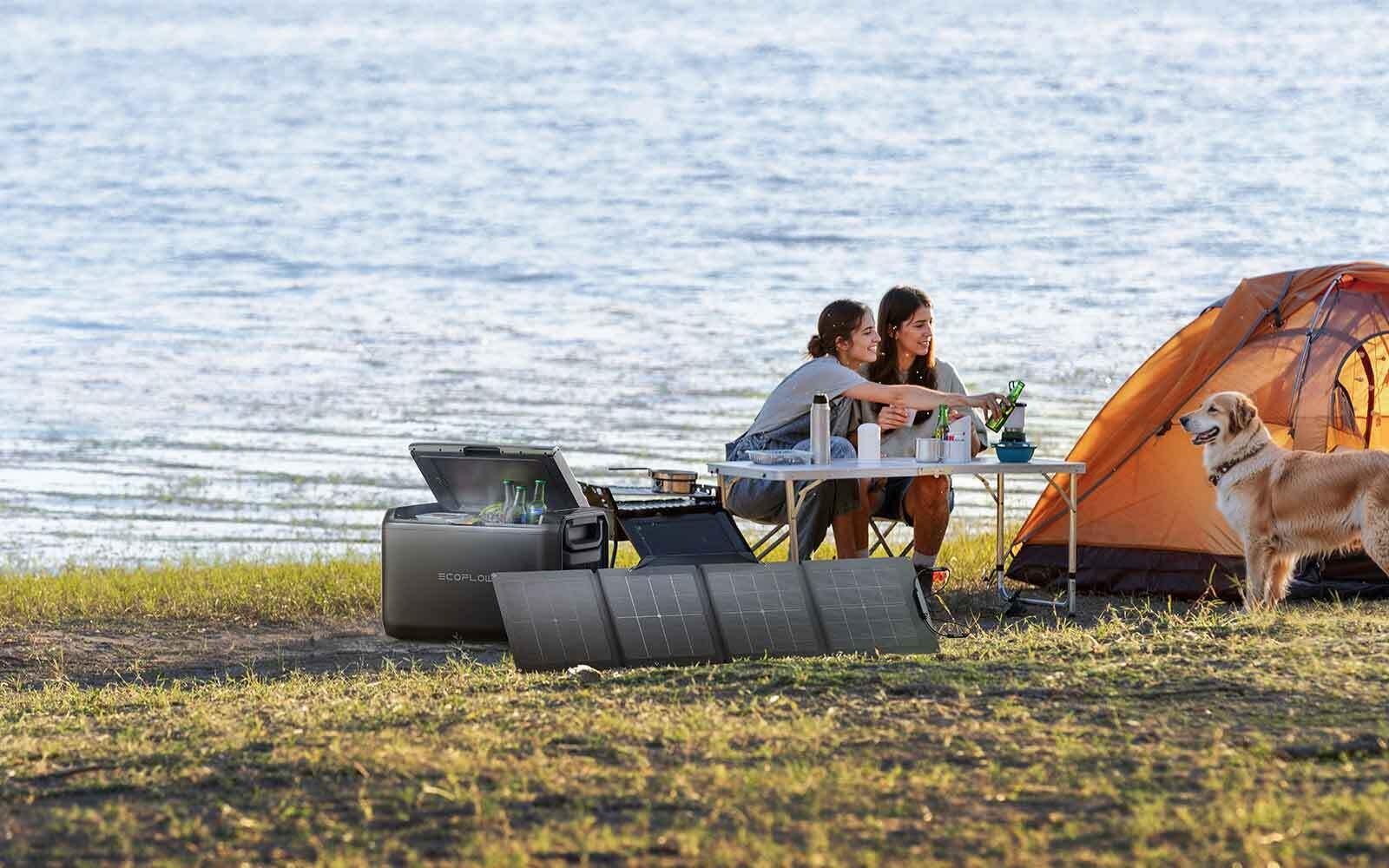
The dream: cold drinks, sunny skies, and a battery that keeps up with your fridge.
🛒 Quick Picks — Jump Straight to the Best Gear
One of the most common questions I get asked on Facebook forums is: "Will my 100Ah leisure battery power a camping fridge? How long will it last?"
The honest answer? It depends. And not in a frustrating way — I'll show you exactly how to calculate it.
If you've got a leisure battery setup → in your campervan, this guide will tell you precisely how long you can run a fridge before needing to drive or recharge. No guessing. Just maths. (Many campers pair this with a diesel heater → for winter camping, which adds another layer of power planning.)
The Quick Answer
A 100Ah leisure battery will power a typical camping fridge for 15 to 40 hours, depending on three things:
- Battery type — Lead-acid vs lithium makes a HUGE difference
- Fridge power draw — Small fridges (20W) last longer than large ones (50W)
- Real-world conditions — Temperature, how often you open it, and the duty cycle all matter
Here's the thing: you can't use 100% of your battery's capacity. Lead-acid batteries should stay above 50% charge to avoid damage. Lithium can go much deeper. That's why lithium batteries feel like they last longer.
⚡ Interactive Camping Fridge Battery Calculator
Use the sliders below to match your setup. The calculator accounts for battery type, usable capacity, and real-world duty cycle.
🔋 Your Setup
⚠️ Real-world results vary by ±20–30% depending on fridge efficiency, how often you open the door, and how full it is. Use this as a planning guide, not a guarantee.
⚡ Know Your Battery in Real-Time
See exactly how much power you have left. A battery monitor transforms guesswork into certainty.
View ECO-WORTHY Monitor →£55–65 · See your battery % instantly · Works with any 12V system
🔋 Want More Runtime? Upgrade to Lithium
Double your usable capacity. Triple your lifespan. Lithium is the smart upgrade for serious campers.
View Lithium Battery →£150–250 · 90Ah usable · 10+ year lifespan
Battery Type: The Game Changer
This is the biggest factor. Two 100Ah batteries don't perform the same.
🔋 Lead-Acid (AGM) Leisure Battery
110Ah Leisure Battery (AGM) → (This is what I currently use)
Usable capacity: ~50Ah (keep above 50% to preserve lifespan)
Real runtime example (30W fridge):
- Usable power: 50Ah
- Fridge draw: 30W ÷ 12V = 2.5 amps per hour
- Runtime: 50Ah ÷ 2.5A = 20 hours
Cost: £140–200 | Lifespan: 3–5 years with proper care | Best for: Budget-conscious, short trips, moderate use
⚡ Lithium (LiFePO4) Leisure Battery
Eco-Worthy LiFePO4 Battery → (My next upgrade — much better value long-term)
Usable capacity: ~90Ah (safe to 10–20% discharge)
Real runtime example (same 30W fridge):
- Usable power: 90Ah
- Fridge draw: 30W ÷ 12V = 2.5 amps per hour
- Runtime: 90Ah ÷ 2.5A = 36 hours
Cost: £150–250 | Lifespan: 10+ years | Best for: Extended trips, heavy use, serious campers
💡 Real talk: Lithium costs 3–4x more upfront, but lasts 2–3x longer and gives you 80% more usable capacity. Over 10 years, they're often cheaper per year. If you're wild camping regularly, lithium wins. If you're weekend camping with hook-ups nearby, lead-acid is fine.
Step 1: Know Your Fridge's Power Consumption
This is where most people get stuck. You need to know how many watts your fridge actually uses.
Where to find it: Check the spec sheet or the back of your fridge. Look for "power consumption" or "watts @ 12V".
If it's not listed, look up your exact model online. Most compressor fridges fall into these categories:
| Fridge Size | Power Draw (Watts) | Amps @ 12V | Runtime (Lead-Acid) | Runtime (Lithium) |
|---|---|---|---|---|
| Small (20–30L) | 20–25W | 1.7–2.1A | 24–30 hrs | 43–53 hrs |
| Medium (30–50L) | 30–40W | 2.5–3.3A | 15–20 hrs | 27–36 hrs |
| Large (50–70L) | 40–50W | 3.3–4.2A | 12–15 hrs | 21–27 hrs |
⚠️ These are average estimates at mild temperatures (50% duty cycle). Real-world can vary by 20–30% depending on ambient temperature, how often you open the door, and fridge efficiency.
Step 2: Calculate Your Actual Runtime
Here's the formula (it's simpler than it looks):
Runtime (hours) = Usable Battery Capacity (Ah) ÷ Fridge Draw (Amps)
Example: Lead-Acid Battery + Medium Fridge
- Battery: 100Ah lead-acid (50Ah usable)
- Fridge: 35W (typical compressor fridge)
- Conversion: 35W ÷ 12V = 2.9 amps per hour
- Calculation: 50Ah ÷ 2.9A = 17.2 hours
Real-world expectation: 15–20 hours (accounting for temperature variation and opening the door)
Example: Lithium Battery + Same Fridge
- Battery: 100Ah lithium (90Ah usable)
- Fridge: 35W
- Conversion: 35W ÷ 12V = 2.9 amps per hour
- Calculation: 90Ah ÷ 2.9A = 31 hours
Real-world expectation: 28–34 hours
The Duty Cycle: Why Fridges Don't Run Constantly
Here's something most calculators ignore: your fridge doesn't run 24/7.
A compressor fridge has a duty cycle. It compresses cold air, brings the interior to temperature, then shuts off until the internal temp rises again. It might run 30% of the time in cool weather, 50% in hot weather.
This is why real-world runtime often beats your calculations:
- Cool day (15°C): Duty cycle ~25–30% → Fridge "off" most of the time. Calculated 20 hours might actually be 30–40 hours
- Moderate day (20°C): Duty cycle ~40–50% → Closer to your calculations
- Hot day (30°C+): Duty cycle ~70–80% → Fridge runs constantly. Calculated 20 hours might be only 12–15 hours
That's why I always add a safety buffer: assume 20–30% worse performance than your maths suggest. It's better to be surprised by extra battery life than to run flat.
Real-World Camping Scenarios
🏕️ Weekend Trip (Moderate Use)
Setup: 100Ah lead-acid leisure battery, 35W fridge, mild weather (18–22°C)
Day 1 evening → Day 2 evening: ~18–20 hours of running
Result: Battery at ~50% (safe limit for lead-acid). Fridge still cold. Drive home or find hook-ups.
Verdict: Perfect for a long weekend. You've got breathing room.
🌞 Hot Weather Trip (Heavy Use)
Setup: 100Ah lead-acid, 35W fridge, hot weather (28–32°C)
Day 1 midday → Day 2 morning: ~12–15 hours of running
Result: Battery at ~50%. Fridge has worked hard. Need to recharge.
Verdict: One night, tops. In hot weather, battery drains faster. Plan accordingly.
⛺ Extended Camping (Lithium + Solar)
Setup: 100Ah lithium leisure battery →, 35W fridge, solar panels → for recharging
Scenario: 3–4 day trip, sunny weather
Result: Fridge runs 28–32 hours on battery. Solar adds 30–40Ah per day. Battery stays above 60% throughout trip.
Verdict: Genuine off-grid freedom. This is why lithium + solar is the dream setup.
5 Ways to Extend Your Fridge Runtime
Not ready to upgrade your battery? Try these alternatives — or combine them with other heating/cooling solutions like a diesel heater → for full climate control:
- Pre-cool before camping — Run the fridge overnight at home. Start with maximum cold. It'll hold temperature longer in the van
- Minimise door opens — Every time you open it, warm air floods in and the compressor works harder. Plan your meals, grab what you need, close fast
- Park in shade — Direct sun heats the fridge cabinet. Shade can reduce cooling load by 30–40%
- Insulate the fridge — Wrap it in a reflective blanket in hot weather. Or a simple foam box around it helps
- Use ice or gel packs — Pre-cool with ice. It absorbs the cooling work and extends runtime. Just refill at campsites or towns
Which Camping Fridge Should You Buy?
If you're shopping for a campervan fridge, here are the best options with real power specs:
🏆 Best Budget Option
EcoFlow GLACIER Portable Fridge Freezer (55L) →
- 30–35W typical draw — solid for a lead-acid setup
- Proven reliability, used by overlanders worldwide
- Dual-zone — fridge and freezer in one unit
- Cost: £400–500
⚡ Best Value (Most Efficient)
Dometic CoolFun CK 40D Portable Fridge (40L) →
- 22–25W typical draw — excellent for stretching battery life
- Compact, perfect for day vans and smaller campervans
- Great choice if you're on a lead-acid battery
- Cost: £250–350
🏅 Best Premium Option
Dometic CFX3 100 Mobile Fridge Freezer (88L) →
- 35–40W typical draw — needs a lithium battery to shine
- Huge capacity, exceptional build quality — built to last
- Best for longer trips and families
- Cost: £600–750
Choosing Your Leisure Battery
You've got two main options for your campervan's leisure battery: AGM (lead-acid) or Lithium. Here's what I use and what I'd upgrade to:
🔋 AGM Leisure Battery (What I Have Now)
- Cost-effective entry point for campervan power
- Proven reliability for casual camping and weekenders
- Usable capacity: ~50Ah (keep above 50% charge)
- Lifespan: 3–5 years with proper care
⚡ Lithium LiFePO4 Battery (My Next Upgrade)
- Excellent value (£150–250 for 100Ah lithium)
- Usable capacity: ~90Ah (safe to 10–20% discharge)
- Better performance in cold weather — important for UK camping
- Lifespan: 10+ years — worth the investment for serious campers
Do You Need a Battery Monitor?
Honestly? Yes, I'd recommend one — and it's the cheapest upgrade that makes the biggest practical difference.
A battery monitor sits between your battery and loads, and shows you real-time voltage, current draw, and remaining amp-hours. Instead of guessing "how long until I run out?", you can see it.
- Why it helps: You can see exactly how many amps your fridge is drawing. Is it really 35W or more like 42W? The monitor tells you
- Peace of mind: You know your battery percentage. No guessing if you'll make it through the night
- Cost: £60–100 for a decent one — genuinely worth it
🔋 Recommended Power & Battery Products:
- 110Ah Leisure Battery → — Deep-cycle AGM battery for extended off-grid power
- Eco-Worthy LiFePO4 Battery → — High-capacity lithium for serious campers
Frequently Asked Questions
How long will a 100Ah leisure battery power a camping fridge?
A 100Ah lead-acid battery will run a typical 30–35W camping fridge for around 15–20 hours. A 100Ah lithium battery extends that to 28–36 hours, because you can safely use 90% of its capacity vs only 50% for lead-acid. Use the calculator above to get a number for your exact setup.
Can I run a fridge on my starter battery?
Technically yes. Practically no. Your starter battery is designed to start the engine — quick, high-power bursts. A fridge is a slow, continuous load. Drain your starter battery and the van won't start. That's why you need a separate leisure battery. See the leisure battery setup guide →
Will a cheap 100Ah battery last as long as an expensive one?
Sort of. All 100Ah batteries theoretically store the same energy. But cheap batteries often have lower quality internals and shorter lifespan. A £150 lead-acid might last 2 years. A £200 quality AGM might last 5 years. Cost per year? Often the same or better for the quality battery.
Can I drain my leisure battery to 0%?
Lead-acid: No. Going below 50% drains the battery deeply and damages it. You lose 50% usable capacity.
Lithium: Usually safe to 10–20% (check your specific battery). This is why lithium gives you so much more runtime.
What if I add solar panels to my campervan?
Game changer. A modest solar setup → (100–150W) can generate 30–50Ah per day in good sun. Instead of worrying about runtime, your battery recharges while you're parked. That's genuine off-grid freedom.
My fridge draws more watts than the spec sheet says. Why?
The spec sheet is usually average draw. Fridges cycle on and off. When the compressor kicks in, it draws peak watts (sometimes 50–100% more than average). That's why a "30W fridge" might pull 40W at peak. Always assume 20% higher than spec for safety.
The Bottom Line
Your leisure battery can power a camping fridge for 15–40 hours depending on battery type, fridge power draw, and weather. Lead-acid gives you one solid night plus morning. Lithium gives you 1.5–2 days. Add solar, and you've got unlimited freedom.
Don't overthink it. Use the calculator above, add a 20% safety margin, and you'll land in the right ballpark. And if you want precision on the road, grab a battery monitor — they're cheap and genuinely useful.
Most importantly: start with a modest fridge and a quality battery, and upgrade as you learn what you actually need. Your first camping trip will teach you more than any blog post.

Related Guides
This post contains affiliate links. If you purchase through these links, I may earn a small commission at no extra cost to you. It helps keep Jenny on the road and this website running — thank you!