The Quick Answer
A typical 35W compressor fridge uses about 35Ah (420Wh) a day in mild weather. For a weekend with no charging you'd want roughly:
- 140Ah of lead-acid / AGM leisure battery, or
- 80Ah of lithium leisure battery, or
- a 1,000Wh+ portable power station.
Want the exact figure for your fridge? Try my camping fridge battery calculator.
"What size battery do I need?" is one of the questions I see most on the VW forums. My calculator answers the opposite question (how long will this battery last?), so this guide works it the other way round: start with your fridge and how long you want to be off-grid, and work back to the battery or power station you need.
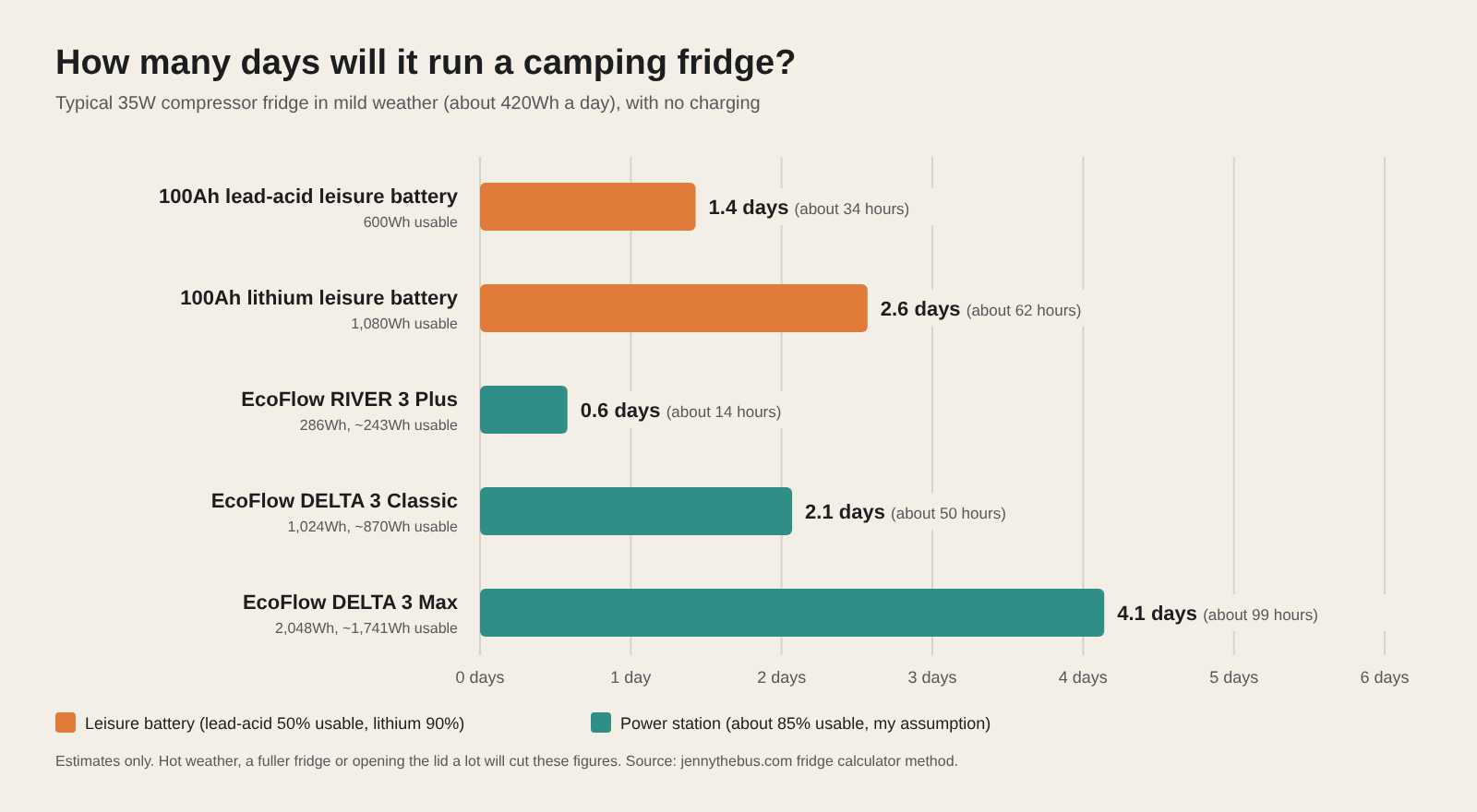
How long each option runs a typical 35W fridge in mild weather, with no charging. Estimates, not guarantees.
Step 1: How Much Does Your Fridge Use a Day?
Check your fridge's spec sheet for its power draw in watts at 12V. Then remember it doesn't run all the time: a compressor fridge cools down, switches off, and kicks in again when it warms up. How often depends mostly on the weather. I use the same assumptions as my calculator:
| Fridge draw | Cool (under 15°C) runs ~35% of the time |
Mild (15–25°C) runs ~50% |
Hot (25–35°C) runs ~75% |
|---|---|---|---|
| 25W (small, 20–30L) | 18Ah / 210Wh | 25Ah / 300Wh | 38Ah / 450Wh |
| 35W (medium, 30–50L) | 25Ah / 294Wh | 35Ah / 420Wh | 53Ah / 630Wh |
| 45W (large, 50–70L) | 32Ah / 378Wh | 45Ah / 540Wh | 68Ah / 810Wh |
The sum: watts ÷ 12 = amps. Amps × 24 hours × how much of the time it runs = amp-hours (Ah) a day. Multiply Ah by 12 for watt-hours (Wh), which is how power stations are measured.
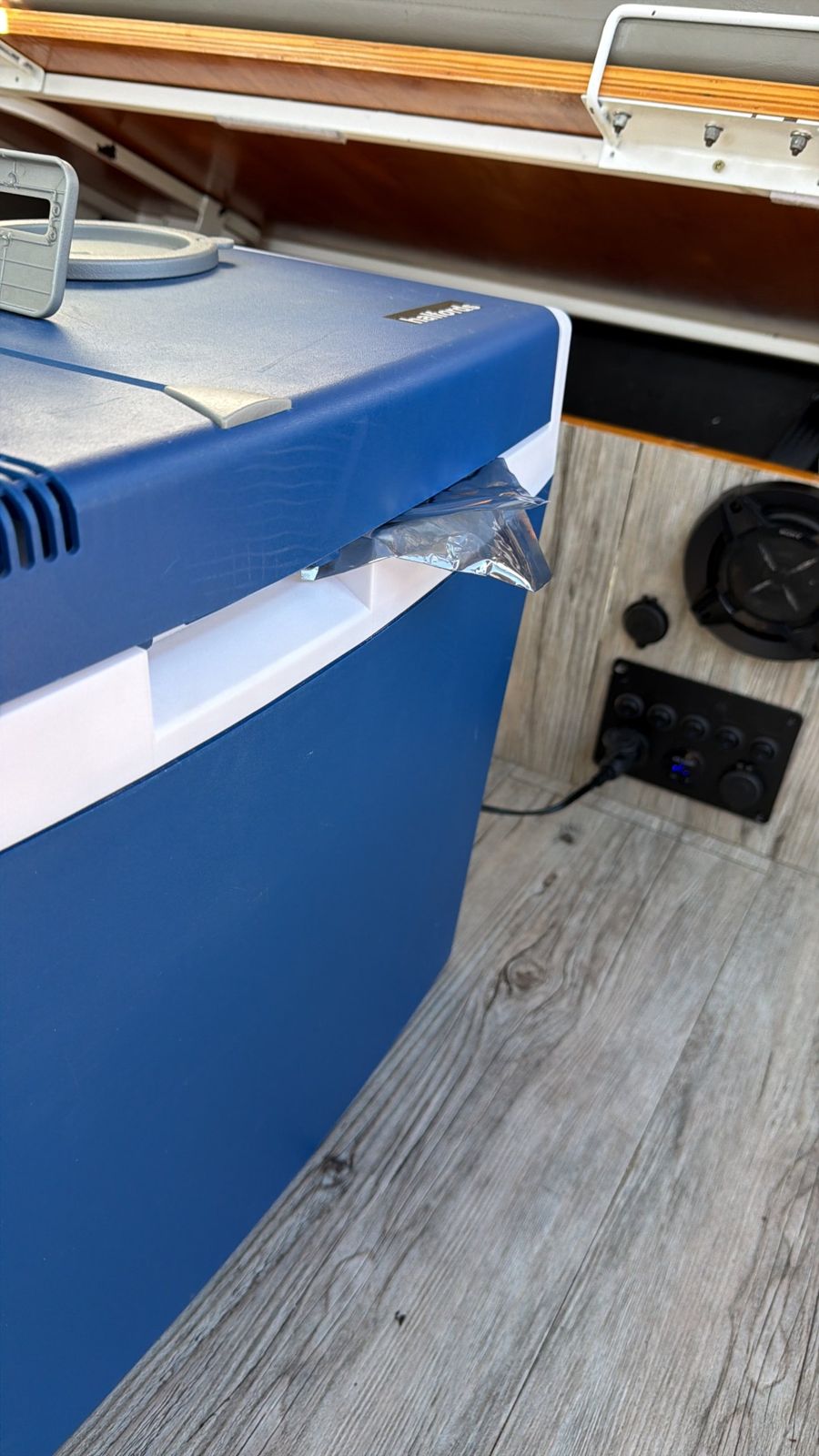
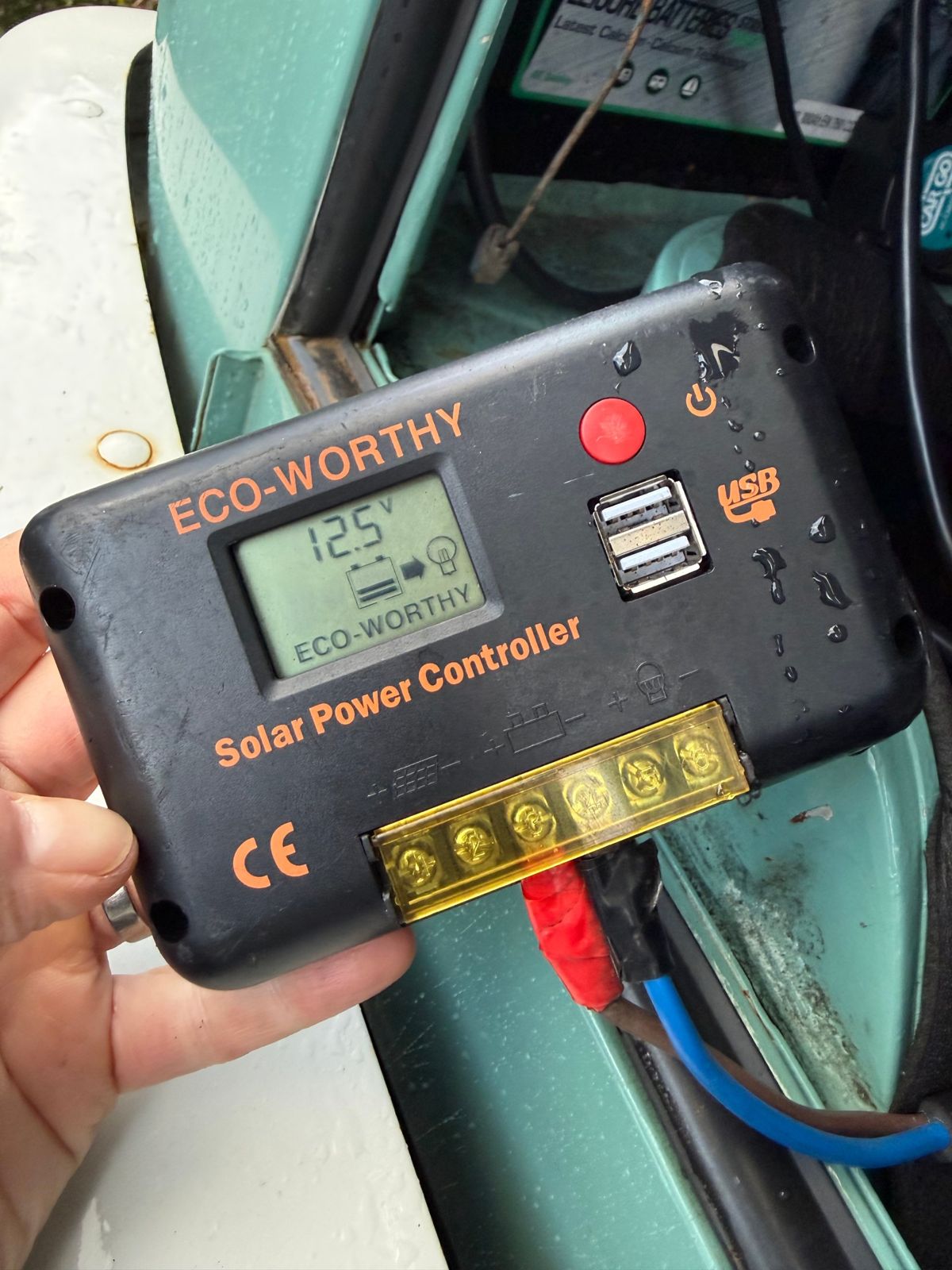
My Halfords coolbox plugged into the 12V panel, and the solar controller showing the leisure battery at a healthy 12.5V.
Coolbox or compressor fridge? The figures above are for compressor fridges, which switch on and off. Most plug-in electric coolboxes, like my Halfords one, are thermoelectric: they tend to run all the time and only cool to a set amount below the air around them. So plan on a coolbox using its full rated watts, all day. Check yours before you rely on the duty-cycle figures.
Step 2: Remember You Can't Use the Whole Battery
This is the bit that catches people out. The number on the battery isn't the number you get to use:
- Lead-acid / AGM: keep it above half charge or you'll shorten its life. A 100Ah battery gives you about 50Ah.
- Lithium (LiFePO4): you can safely use most of it. A 100Ah battery gives you about 90Ah.
- Power stations: the Wh figure on the box is the battery inside, and some is lost converting it to power your kit. I allow about 85% usable. That's my rule of thumb, not a maker's figure, so treat it as a rough guide.
Step 3: Multiply by How Long You'll Go Without Charging
Here's what that works out at for a typical 35W fridge in mild weather (35Ah a day), assuming no driving, solar or hook-up in between:
| Time off-grid | Lead-acid / AGM | Lithium | Power station |
|---|---|---|---|
| 1 night (24 hours) | 70Ah | 40Ah | 500Wh |
| A weekend (2 days) | 140Ah | 80Ah | 1,000Wh |
| A long weekend (3 days) | 210Ah | 120Ah | 1,500Wh |
In practice most of us drive at some point, which tops a leisure battery back up through a split charge relay, or have a bit of solar. So these are worst-case figures. If it's going to be hot, add a good margin: in a heatwave the same fridge can use half as much again.
Remember the fridge isn't the only thing on the battery. Lights, phone charging and a diesel heater in winter all add up. I'd size for the fridge and then add at least 20% on top.
Leisure Battery or Power Station?
Both will run a fridge. The right one depends on how your van is set up and how much wiring you fancy doing.
| Leisure battery + split charge | Portable power station | |
|---|---|---|
| Fitting | Wiring, a relay, fuses and a breaker | None: plug the fridge in |
| Charges while driving | Yes, through the split charge relay | Slowly, from a 12V socket if you have one |
| Charges from solar | Yes, with a charge controller | Yes, plug a panel straight in |
| Use it outside the van | No | Yes: campsite, garden, power cuts |
| Mains (240V) sockets | Only with a separate inverter | Built in |
| Best for | A permanent setup you never think about | No wiring, or kit that moves between vehicles |
What I run in Jenny
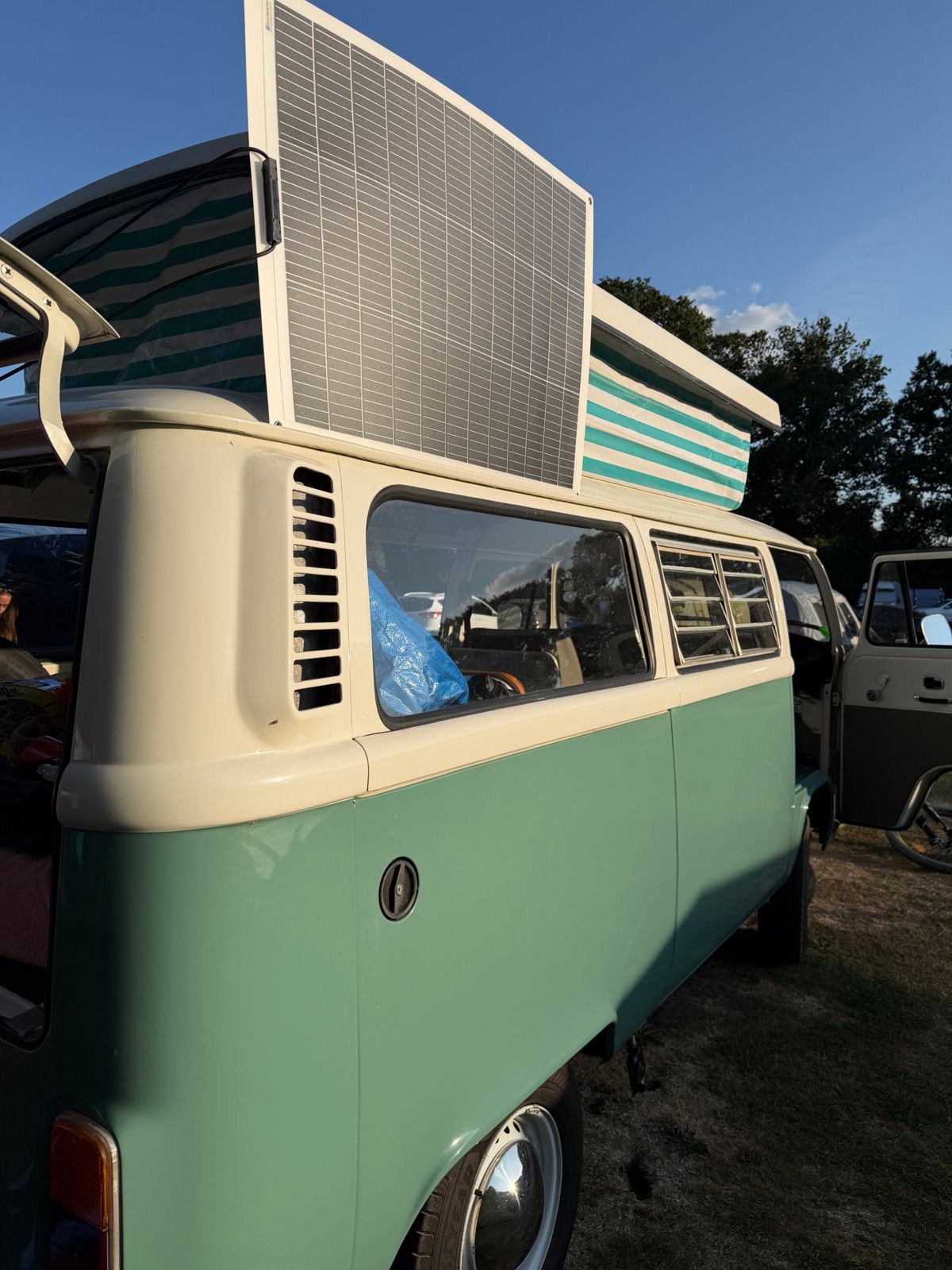
Jenny on a campsite with the pop-top up and the solar panel catching the evening sun.
Jenny has a 100Ah Lion lead-acid leisure battery, charged by a voltage-sensitive split charge relay while I drive, plus a 120W Eco-Worthy solar panel when we're parked up. I wrote up the whole leisure battery and split relay install if you want to do the same.
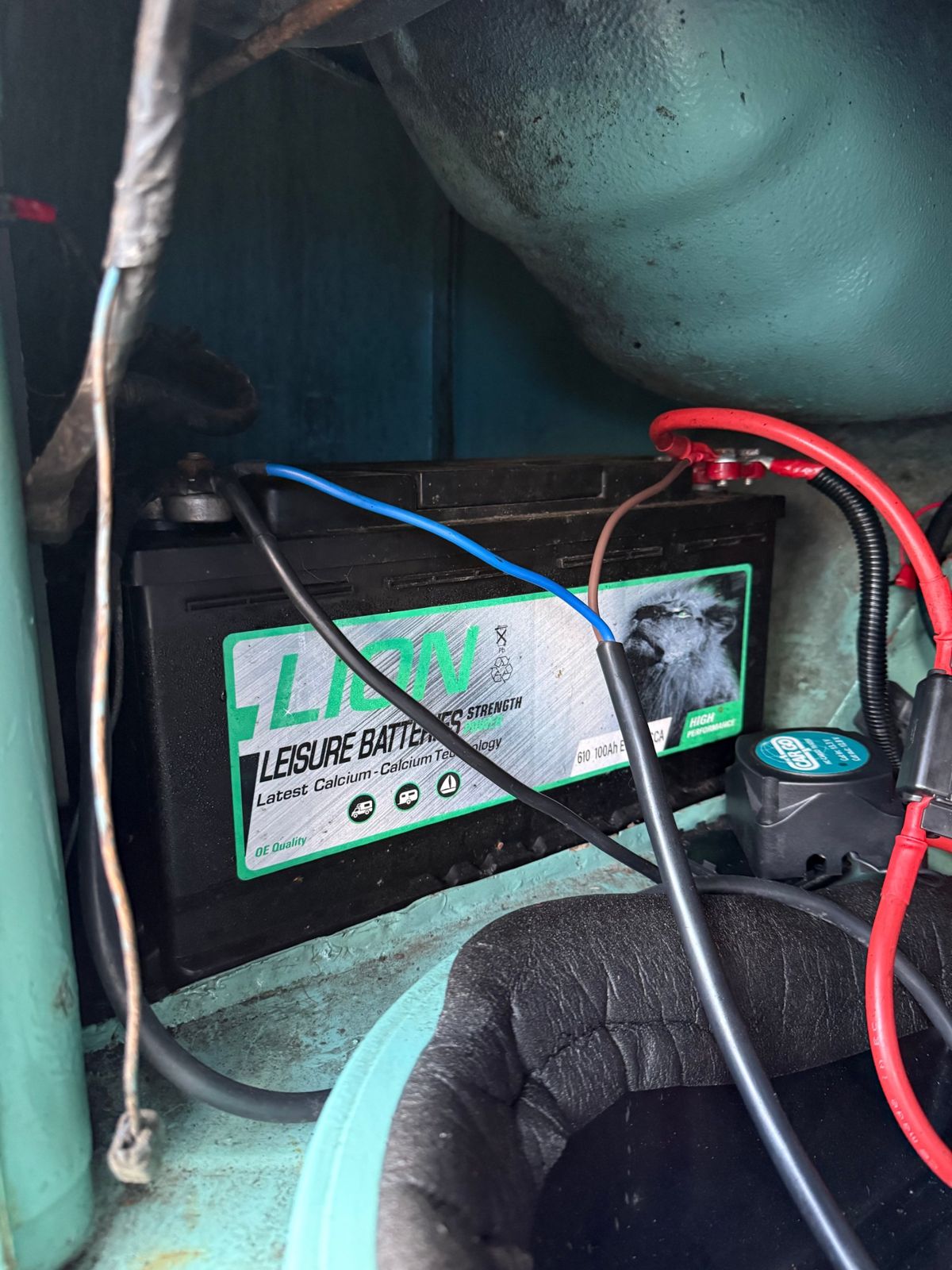
The Lion 100Ah leisure battery in Jenny’s engine bay, with the split charge relay beside it.
Lithium is tempting, but it isn't a straight swap on my setup: a voltage-sensitive relay isn't suitable for charging lithium, so I'd need a DC-to-DC charger as well. That's partly why a power station appeals as an alternative. It brings lithium capacity with no rewiring at all.
The Options I'd Look At
These are affiliate links, which help keep this site running at no extra cost to you.
Leisure batteries
- 110Ah AGM leisure battery — about 55Ah usable, so a night and a half for a typical fridge. The budget option.
- Eco-Worthy 100Ah lithium (LiFePO4) — about 90Ah usable, so around two and a half days. Remember it needs a lithium-friendly charger, not a voltage-sensitive relay.
- Battery monitor — shows exactly how much you've got left, so you stop guessing.
Portable power stations (EcoFlow)
- EcoFlow RIVER 3 Plus (286Wh) — small and light. Around half a day of fridge on its own, so best for day trips or topping up phones and lights.
- EcoFlow DELTA 3 Classic (1,024Wh) — about two days of fridge. The sweet spot for a weekend.
- EcoFlow DELTA 3 Max (2,048Wh) — about four days of fridge, or a weekend with plenty to spare for everything else.
Keep it topped up
- EcoFlow 160W portable solar panel — plugs straight into EcoFlow power stations.
- Split charge relay kit — charges a lead-acid leisure battery while you drive.
And the fridge
- EcoFlow GLACIER Classic 55L — dual-zone fridge freezer. More fridge choices in my calculator guide.
Common Questions
What size leisure battery do I need for a camping fridge?
For a typical 35W compressor fridge in mild weather, allow about 35Ah a day. For a weekend with no charging that means roughly 140Ah of lead-acid (AGM) or about 80Ah of lithium, because you can only use about half of a lead-acid battery.
Will a 100Ah leisure battery run a fridge overnight?
Yes, comfortably. A 100Ah lead-acid (AGM) battery gives about 50Ah usable, which runs a typical 35W fridge for around a day and a half in mild weather. A 100Ah lithium battery gives roughly two and a half days.
What size power station do I need for a camping fridge?
Allow around 420Wh a day for a typical 35W fridge in mild weather. A 1,000Wh power station covers about two days, a 2,000Wh one about four. Small 300Wh units manage less than a day.
Is a power station better than a leisure battery?
Neither is better for everyone. A leisure battery with a split charge relay is cheaper per Wh and charges as you drive. A power station needs no wiring, can be carried out of the van and suits people who don't want to touch their van's electrics.
🔋 Related Guides
- 🧊 Camping Fridge Battery Calculator — how long will your battery last?
- 🔌 Leisure Battery & Split Charge Relay — how I wired Jenny's
- ☀️ Adding Solar Power to Your Camper
- 🔥 Fitting a Diesel Heater — another load to plan for in winter