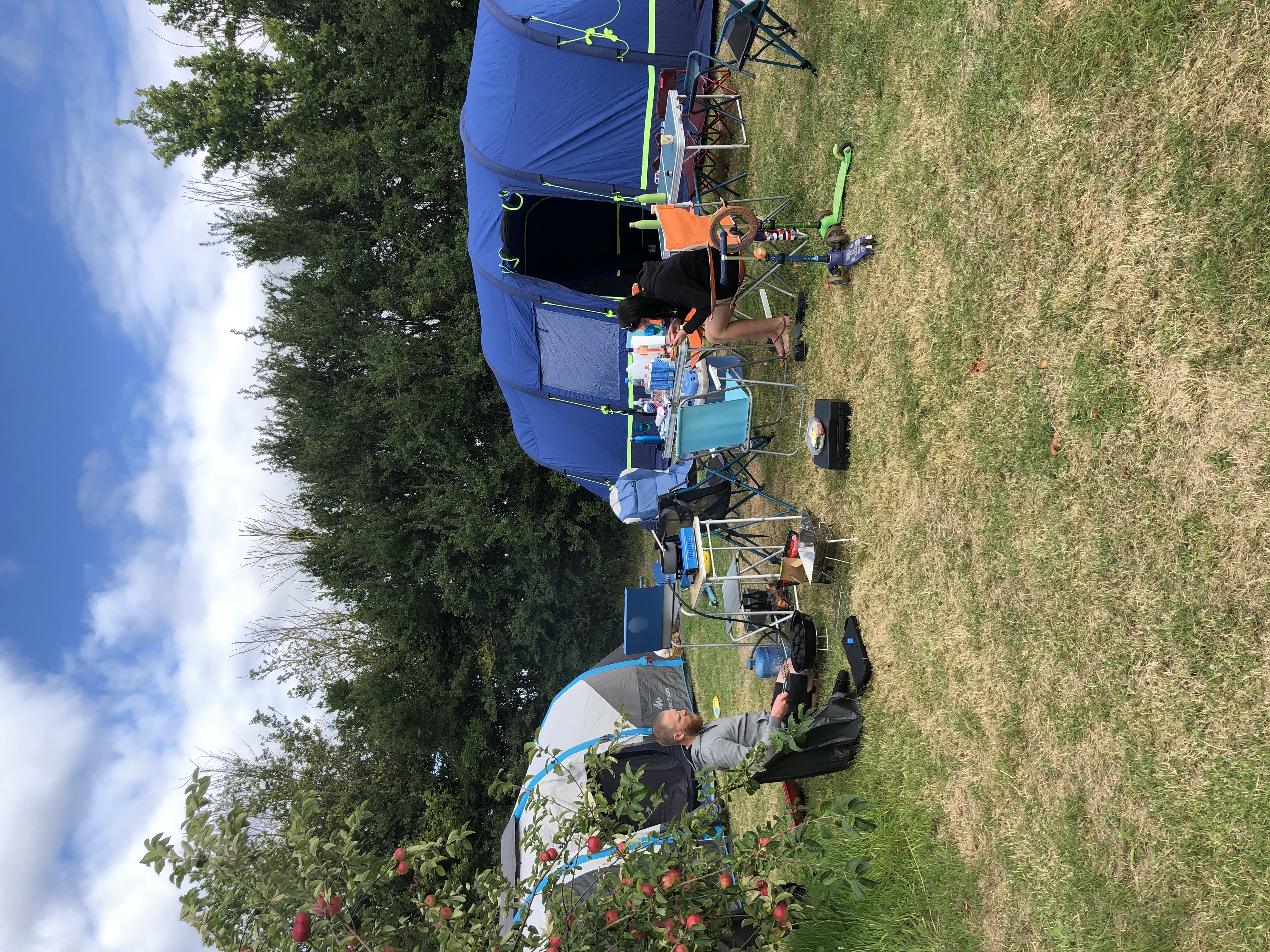
You don't buy a VW campervan for the space. Let's be honest — a Bay Window T2 gives you roughly the same square footage as a garden shed. But that's kind of the point. Strip it back to the essentials, pick the right gear, and you'll sleep better in a campsite field than most people do in a hotel.
Here's everything we use, what works, what doesn't, and how to make a tiny van feel like home.
Sleeping: Get This Wrong And You'll Hate Camping
This is the one thing that makes or breaks a trip. Get a bad night's sleep in a van and suddenly the whole "adventure" feels like a punishment.
The Mattress Situation
The built-in bed in most VW campervans is... functional. It's a flat surface. That's about the nicest thing you can say about it. The original foam cushions compress over the years until you're basically sleeping on plywood with a suggestion of padding.
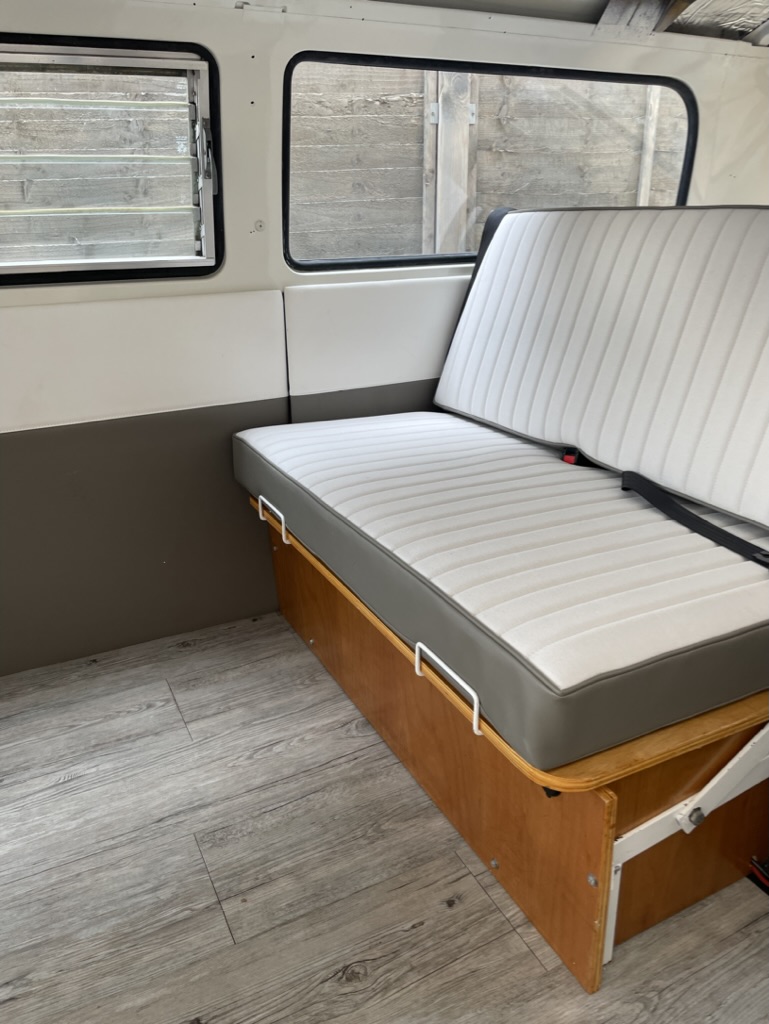
Our rock and roll bed: We had Jenny's rock and roll bed and mattress completely redone by Rayley Restorations (rayleyrestorations.co.uk) — James, who runs it, is based on the South Coast and does absolutely impeccable work. The quality is outstanding. We're already planning to go back for the cab headlining soon. If you're looking for professional upholstery work on a classic VW, we can't recommend them highly enough.
For the awning: We use inflatable mattresses from inflatable camping mattresses at Decathlon → where the kids sleep in the awning. Get one that's designed for camping — they're narrower than a home air bed and pack down small enough to store easily during the day. That's the key with van life: everything needs to earn its space.
Top tip: Get a mattress with a built-in pump or at least a battery-powered one. Blowing up a double air bed with your lungs after a long drive is nobody's idea of fun.
Sleeping Bags That Actually Keep You Warm
Here's what nobody tells you about sleeping in a VW: it gets cold. The thin metal body, the single-glazed windows, the gaps where the pop-top meets the roof — heat escapes from everywhere. Even in British summer, a 3am chill will wake you up if you're not prepared.
We've tried a few sleeping bags over the years and the ones from Mountain Warehouse and Go Outdoors have been the best value. You don't need to spend £200 on an expedition bag — you need something rated to around 0-5°C that doesn't take up half the van when packed.
What to look for:
- Season rating: 3-season minimum for UK camping. If you're going October onwards, go 4-season
- Shape: Rectangular is more comfortable; mummy bags are warmer but feel like a straightjacket
- Zip compatibility: Get two that zip together for double-bed mode. Game changer
- Pack size: This matters more than you think when you're fitting everything into a Bay Window
💡 Pro Tip
Chuck a fleece liner inside your sleeping bag. Adds warmth equivalent to a full season rating and you can wash it easily. Sleeping bags are a pain to clean — liners aren't.
Cooking: A Proper Meal in a Campervan Kitchen
You can live on service station sandwiches and crisps, but why would you? Half the joy of van life is cooking something decent with the side door open, watching the sun go down.
The Stove
We cook on a Cadac Dometic 2-burner stove and it's genuinely brilliant. Two burners is the sweet spot for van cooking — enough to boil pasta on one ring while heating sauce on the other. One burner is too limiting; three is unnecessary and takes up too much space.
The Cadac Dometic runs on standard gas canisters, lights reliably (even when it's windy, which in the UK is basically always), and most importantly — it's compact. When you're working with a VW campervan kitchen, every centimetre counts.
What we cook most:
- Full English breakfast (obviously)
- One-pot pasta dishes
- Stir fry with pre-chopped veg (prep at home, cook at camp)
- Toasted sandwiches in a camp pan
- Soup — don't knock it. Hot soup on a cold evening after a walk is elite
Storage tip: Pre-portion meals into zip-lock bags before you leave. It saves space, reduces washing up, and means you're not trying to chop onions on a camping table in the rain.
Book recommendation: If you want proper campervan cooking inspiration, get Martin Dorey's The Camper Van Cookbook. It's written by someone who actually cooks in a van, not a chef pretending they've roughed it. Simple recipes, realistic portions, and ingredients you can actually buy from a village shop when you've forgotten something. It lives in our van permanently.
The Kitchen Setup
Beyond the stove, keep it simple:
- One good pan, one good pot. That's it. Anything more is clutter
- A sharp knife and a chopping board that fits over the sink
- Reusable plates and cups. Paper plates blow away; ceramic breaks. Go melamine or enamel
- A washing-up bowl that doubles as a salad bowl (don't judge, it works)
- A powered cool box. This isn't optional — it's essential. A regular cool box with ice packs lasts maybe a day before everything's swimming in lukewarm meltwater. A powered cool box plugs into your 12V and actually keeps things cold. Milk that's still milk, butter that's still solid, and — critically — beer that's still cold
The Awning: Doubling Your Living Space
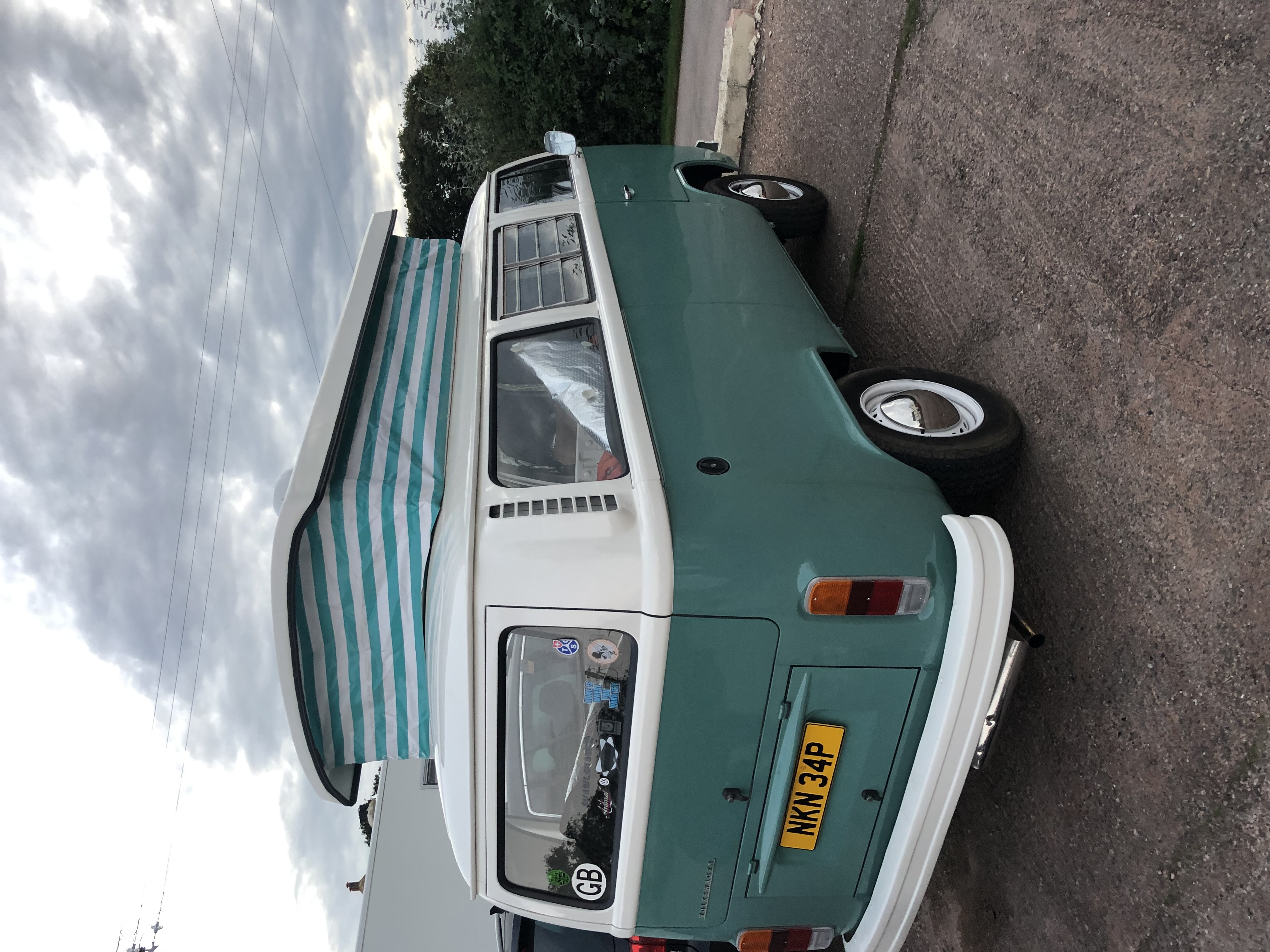
This is the single best upgrade you can make for camping comfort. A Vango driveaway awning essentially doubles your living space — and in a VW campervan, that's going from "cosy" to "actually comfortable."
Why Driveaway?
A driveaway awning attaches to the side of the van but has its own frame, so you can disconnect and drive off without packing the whole thing down. Need to do a supply run? Unhook, drive, come back, reconnect. Your camp stays set up.
Why we rate the Vango:
- Quick to pitch: Two people, 15-20 minutes once you've done it a couple of times
- Solid in wind: Inflatable poles sound gimmicky but they actually handle wind better than rigid poles — they flex rather than snap
- Fits the Bay Window: Make sure you get the right attachment height for your van. Measure the gutter rail height before buying
- Weatherproof: We've camped through proper British rain in ours and stayed dry. The groundsheet is integrated which keeps draughts and water out
Inside the awning, we set up:
- Foldaway camping table (ours is from foldaway camping tables at Decathlon → — light, sturdy, cheap)
- Inflatable camping chairs (also inflatable camping chairs at Decathlon → — they pack down to nothing)
- The stove (cooking in the awning rather than the van keeps condensation down)
- A small rug on the groundsheet. Sounds unnecessary, feels luxurious
Staying Warm: The Honest Truth
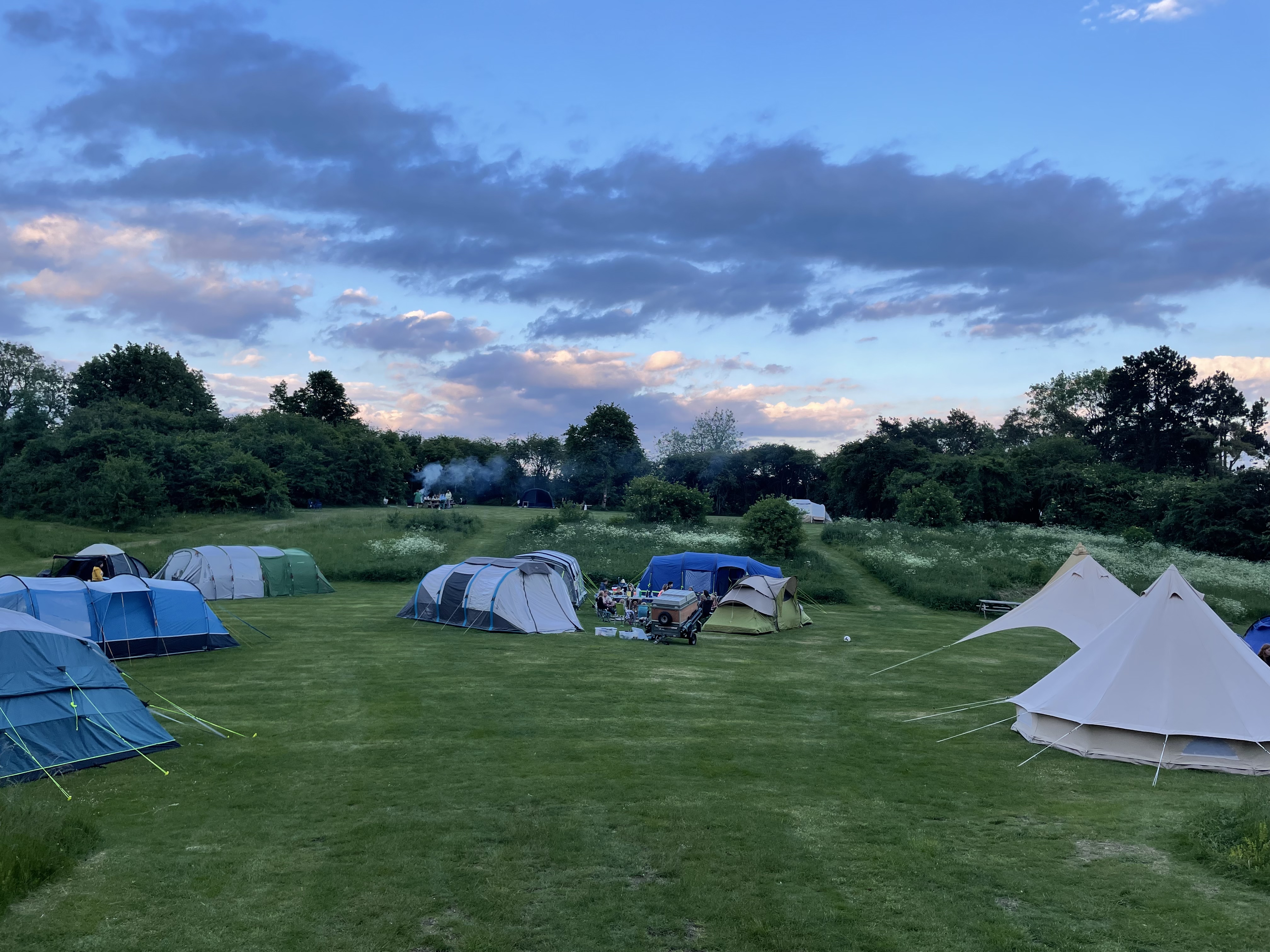
VW campervans aren't insulated. That's just a fact. The pop-top canvas, the single-skin metal body, the rattly windows — they're built for summer in California, not October in the Cotswolds.
How to Stay Warm Without Modifications
If you don't want to fit a diesel heater (which is a whole other project), here's what actually works:
- Good sleeping bags (covered above — don't cheap out on this)
- Thermal curtains over every window. The cheap silver screen sets work well
- Hot water bottle. Old school. Incredibly effective. Boil the kettle before bed
- Layer up. Merino base layer for sleeping. Not cotton — cotton holds moisture and makes you colder
- Close the pop-top vents but crack a window slightly. You need airflow or you'll get condensation dripping on your face at 4am (ask me how I know)
- Cook in the awning, not the van. Steam from cooking = condensation = cold damp van
Condensation: The Real Enemy
More than cold, condensation is what ruins a night in a campervan. Warm breath hits cold metal and you wake up to water streaming down the walls.
The fixes:
- Ventilation. Always. Even when it's cold
- Wipe down surfaces before bed
- A small dehumidifier tub (the silica gel ones from any hardware shop)
- Don't dry wet clothes inside the van
Packing Smart: The Van Life Tetris
Everything needs to fold, deflate, or stack. If it doesn't, it doesn't come.
Our Packing List
Sleep:
- Inflatable mattress (Decathlon)
- Sleeping bags (Mountain Warehouse / Go Outdoors)
- Fleece liners
- Pillows (compressible camping pillows, not home pillows)
Cook:
- Cadac Dometic 2-burner stove
- Gas canisters (x2 minimum)
- One pan, one pot, utensils
- Powered cool box (12V)
- Pre-portioned meals in zip-locks
Live:
- Vango driveaway awning
- Foldaway table (Decathlon)
- Inflatable chairs (Decathlon)
- LED lantern (rechargeable USB type)
- Portable speaker
Comfort:
- Thermal window covers
- Hot water bottle
- Fleece blanket
- Head torches (one each — don't share, trust me)
Don't bother bringing:
- Full-size towels (microfibre travel towels → are fine)
- More than two changes of clothes
- Anything "just in case" — if you haven't used it in three trips, it stays home
The Bottom Line
Camping in a VW campervan isn't about having the most gear. It's about having the right gear. A decent sleeping bag, a reliable stove, and an awning that doesn't leak — that's genuinely all you need to have a brilliant time.
The van provides the adventure. The gear just makes sure you're comfortable enough to enjoy it.
Got questions about any of the gear we use? Drop us a message — happy to share specific models and where to find the best deals.
— Mike & Jenny
Useful Links
This post contains affiliate links. If you purchase through these links, I may earn a small commission at no extra cost to you. It helps keep Jenny on the road and this website running — thank you!